Lawsuits Agains Fema for Shortage of Trailers
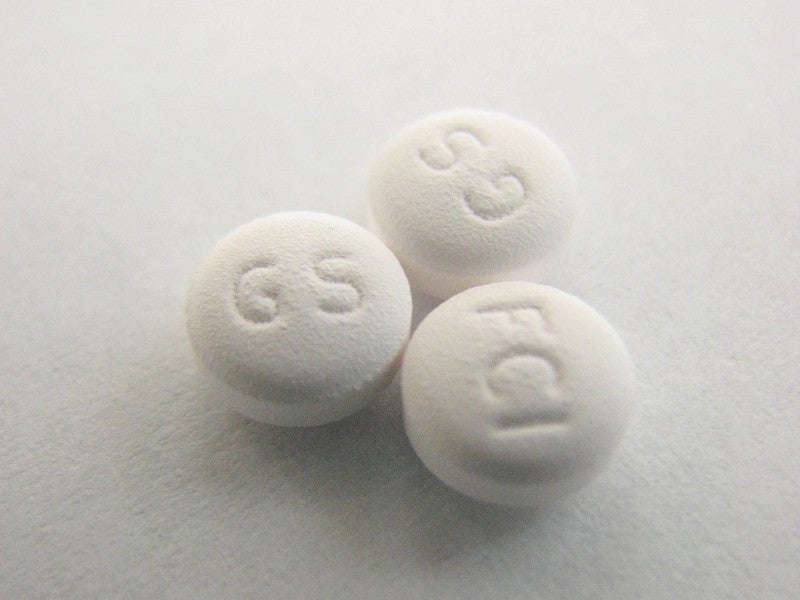
Biggest always pharma lawsuits by settlement corporeality: Ranking the top ten
10. Amgen – $762m
9. Bayer and Johnson & Johnson – $775m
8. TAP Pharmaceutical – $875m
7. Merck – $950m
6. Eli Lilly and Visitor – $one.4bn
5. Abbott Laboratories – $1.5bn
4. Johnson & Johnson – $2.2bn
3. Pfizer – $2.3bn
ii. Takeda Pharmaceutical – $2.4bn
ane. GlaxoSmithKline – $3bn
10. Amgen – $762m

Amgen paid $762m for illegal marketing of various drugs including Aranesp, Enbrel, and Neulasta. Credit: Amgen.
Amgen accepted $612m as ceremonious liability and $150m every bit criminal fine and forfeiture in 2007 for illegally introduced Aranesp into interstate commerce.
Aranesp, an erythropoiesis-stimulating agent (ESA) that competes with Johnson & Johnson (J&J)'s Procrit in the ESA market, was proposed by the company for off-label uses, which the US Food and Drug Administration (FDA) had declined to approve. Amgen afterward misbranded the drug to gain a competitive edge in the market, equally a event of which information technology was caught guilty by the court.
Procrit treats anaemia in cancer patients, whereas Amgen misbranded Aranesp to be treating anaemic cancer patients. The FDA found in 2007 that Aranesp increased the risk of death in patients suffering from the condition.
Amgen was also charged with illegally promoting Enbrel and Neulasta for off-label uses, which could not be reimbursed by federal insurance programmes. It provided illegal kickbacks to influence healthcare providers and reported simulated prices for various drugs.
9. Bayer and Johnson & Johnson – $775m

Bayer and Johnson & Johnson were charged with downplaying the risks associated with Xarelto's use, including internal bleeding, stroke, and death in patients. Credit: Gilded Shield Grouping.
Bayer and J&J jointly resolved approximately 25,000 claims filed in the U.s. federal and state courts confronting their anticoagulant drug, Xarelto, in 2019. The patients filed complaints stating that Xarelto'due south utilize led to internal bleeding, stroke, and even death.
The lawsuits alleged that the two companies downplayed the risks related to Xarelto and marketed the drug as a substitute to another anticoagulant, warfarin, to avert fatal blood clots. Healthcare providers and patients were not informed adequately regarding the risks related to Xarelto and the resulting life-threatening complications.
Developed by Bayer, J&J holds the correct to commercialise the drug in the Us while Bayer markets it in the rest of the globe. The two companies shared the settlement amount equally but did not acknowledge any liability.
8. TAP Pharmaceuticals – $875m

TAP pleaded guilty for the false price and fraudulent marketing practices adopted for its prostate cancer drug, Lupron. Credit: momboleum.
TAP paid approximately $875m for fraudulent drug pricing and marketing practices for its prostate cancer drug, Lupron. The settlement corporeality included $290m as a criminal fine, $559.4m for filing imitation and misleading claims with the Medicare and Medicaid programmes, as well equally $25.5m for filing imitation and misleading claims with the states in 2000.
The visitor offered various incentives to healthcare providers and other customers in the course of gratuitous drugs, trips to resorts, medical equipment, and consultation services for prescribing Lupron to the beneficiaries of Medicare programme.
TAP violated the Prescription Drug Marketing Human activity and charged several elderly beneficiaries of the Medicare programme, likewise as the programme direct, for gratis samples of Lupron.
7. Merck – $950m

Merck paid $950m to settle lawsuits for unlawful promotion and marketing of Vioxx in 2011. Credit: David Hashemite kingdom of jordan.
Merck pleaded guilty and paid $950m to settle criminal and civil liabilities for unlawful promotion and marketing of its painkiller drug Vioxx in 2011.
The FDA initially canonical Vioxx to provide relief from the signs and symptoms of osteoarthritis, direction of acute pain, and treatment of primary dysmenorrhea in 1999. However, the company misbranded Vioxx for rheumatoid arthritis in the interim three years before receiving the FDA'due south approval for the indication in 2002. The drug was afterwards withdrawn in 2004.
Merck was too found guilty of making faux and misleading claims regarding the cardiovascular safety of the drug to increment its sales. The claims affected the payment decisions of the state Medicaid agencies.
6. Eli Lilly and Company – $1.4bn

Eli Lilly misbranded its Zyprexa antipsychotic drug for the treatment of dementia or Alzheimer'due south dementia in elderly patients. Credit: Raining.
Eli Lilly paid a $515m criminal fine and up to $800m as civil settlements to resolve allegations related to the unlawful promotion of its antipsychotic drug Zyprexa in 2009.
The FDA approved Zyprexa to treat manifestations of psychotic disorders and for short-term handling of astute manic episodes related to Bipolar I Disorder and short-term handling of schizophrenia. It could likewise be used to maintain the treatment response in schizophrenic patients.
However, Eli Lilly misbranded the drug for the treatment of dementia or Alzheimer'southward dementia, agitation, assailment, hostility, depression and generalised sleep disorder in elderly patients.
The company trained its sales force to unlawfully promote off-characterization uses and spent resources to promote the drug in nursing homes and to provide rewards for doctors for prescribing them to patients for the unapproved uses. Simulated claims were submitted to federal insurance programmes such every bit Medicaid, avoiding insurance coverage for off-label uses.
five. Abbott Laboratories – $1.5bn

Abbott unlawfully promoted its prescription drug, Depakote. Credit: Abbott.
In 2012, Abbott pleaded guilty to unlawfully promoting its prescription drug Depakote, which resulted in a $700m criminal fine and forfeiture, in improver to $800m in civil settlements.
The FDA approved Depakote for 3 indications, including epileptic seizures, bipolar mania and migraine prevention. Abbott promoted off-characterization use of the drug in dementia patients for controlling behavioural disturbances, low, anxiety, obsessive-compulsive disorder, booze and drug withdrawal, attention arrears disorder, autism, as well as schizophrenia.
Abbott targeted elderly dementia patients and dwarfed the associated risks related to drug usage that was plant in clinical studies. The visitor trained its sales team under various programmes to promote Depakote to healthcare providers and nursing habitation employees. It made agreements with pharmacy providers for the payment of rebates on the increased use of Depakote in nursing homes.
The visitor agreed to pay $800m towards the false claims submitted to the regime healthcare programmes such as Medicare, Medicaid, and TRICARE.
4. Johnson & Johnson – $2.2bn

Johnson & Johnson settled lawsuits for illegal marketing of prescription drugs including Risperdal, Invega, and Natrecor. Credit: Housed.
Johnson & Johnson paid a $485m as a criminal fine and forfeiture and $one.72bn as civil settlements to settle diverse misconduct charges filed in 2013.
The visitor was found guilty of off-label marketing of prescription drugs, including anti-psychotic drugs Risperdal and Invega and heart failure drug Natrecor. It was charged with offer payments to healthcare providers for their unlawful marketing targeting elderly patients with dementia.
The company paid millions of dollars to Omnicare, the largest chemist's in the United states of america, for promoting Risperdal and other drugs in their nursing homes. J&J was institute guilty of understating the serious health risks related to Risperdal usage, including increased risk of strokes in elderly patients.
Omnicare paid $98m to settle its civil liability for accepting payments from J&J and for certain other misconducts in 2009.
3. Pfizer – $ii.3bn

Pfizer paid approximately $1bn to the government insurance programmes to settle civil liabilities. Credit: Coolcaesar.
Pfizer and its subsidiary Pharmacia & Upjohn Company paid $ii.3bn to settle criminal and ceremonious liabilities for illegal promotion of their pharmaceutical products. The amount included payment of more than $102m in civil settlement to six whistleblowers of the visitor's fraudulent practices in 2009.
Bextra, an anti-inflammatory drug that was withdrawn from the market place in 2005 due to prophylactic concerns, was marketed by the visitor for various off-characterization uses. The company likewise illegally promoted several other drugs, including antipsychotic drug Geodon, antibody Zyvox, and anti-epileptic drug Lyrica. Healthcare providers received payments for prescribing these drugs to patients for off-label use.
Simulated claims were submitted to government healthcare programmes, bypassing the insurance programmes. The company had to pay approximately $1bn to Medicare, Medicaid, and other government insurance programmes nether the settlement.
2. Takeda Pharmaceutical – $2.4bn

Takeda paid $2.4bn to settle approximately eight,000 lawsuits over its oral diabetes drug, Actos, in 2015. Credit: J o.
Takeda settled approximately viii,000 federal and state lawsuits over its oral diabetes drug Actos (pioglitazone) by paying $two.4bn in 2015. The company was plant guilty of hiding the bladder cancer risks related to the drug.
Actos became the company'due south top-selling drug post-obit its FDA approving in 1999. It gained popularity in the Usa, particularly later GlaxoSmithKline's controversial diabetes drug Avandia was restricted due to its run a risk of causing cardiovascular problems.
Post-obit Avandia's restriction, Takeda advertised Actos under taglines that claimed the drug lowers blood sugar without increasing the risk of a heart attack or stroke. As a consequence of the advertisements, diabetes patients on Avandia apace switched to Actos.
Patients alleged that the company misled the public and asserted on the benefits of the drug overlooking its side effects based on clinical trials.
ane. GlaxoSmithKline – $3bn

GSK misbranded and unlawfully promoted certain prescription drugs such every bit Paxil, Wellbutrin, and Avandia. Credit: Tokino.
GlaxoSmithKline (GSK) settled the biggest e'er healthcare lawsuit in history with a $3bn payment in 2012. The company pleaded guilty to three counts and paid $1bn as a criminal penalisation and $2bn to resolve civil liabilities.
GSK was found guilty of unlawfully promoting certain prescription drugs such as Paxil, Wellbutrin, and Avandia. It failed to report certain safe data to the FDA and reported faux drug prices to underpay rebates owed under the Medicaid Drug Rebate Program.
Antidepressant drugs Paxil and Wellbutrin were misbranded and healthcare providers were provided diverse rewards past the company to recommend them to the patients for off-characterization uses. The company too failed to produce safety data for Avandia, a diabetes drug that left concerns among patients over its cardiovascular safety.
Related Companies

Source: https://www.pharmaceutical-technology.com/features/biggest-pharmaceutical-lawsuits/
0 Response to "Lawsuits Agains Fema for Shortage of Trailers"
Post a Comment